
Fungal toenail treatment in Esperance
A fungal toenail infection (onychomycosis) is one of the most common nail problems we see at Esperance Podiatry. It's caused by the same group of fungi responsible for tinea (athlete's foot). These fungi feed on keratin, the protein that makes up your skin, hair and nails.
Fungal toenails rarely hurt, so many people put up with them for years. But they don't clear up on their own, and they tend to get thicker and harder to manage over time. The good news is that with the right plan, and some patience, many people get their nails back to looking healthy.
Here's what to look for, why treatment takes a while, and what gives you the best chance of success.
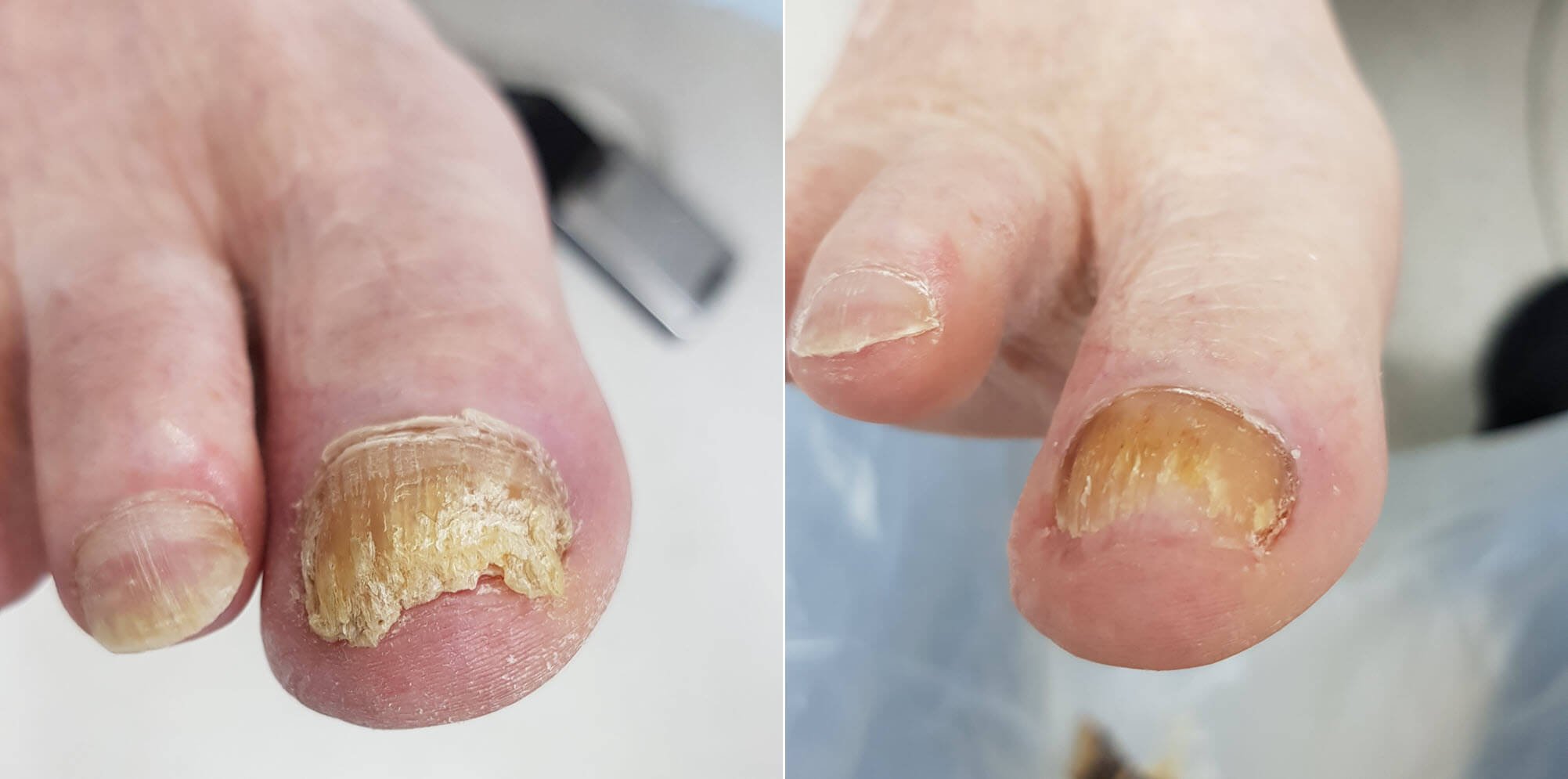
[Image: your own clinical photo of a fungal toenail, with patient consent]
Signs of a fungal toenail
Fungal toenails are usually painless and not itchy. The most common signs are:
Discolouration: yellow, brown or white patches, often starting at the tip or edge of the nail
Thickening: the nail becomes harder to cut and may feel lumpy
Lifting: the nail separates from the nail bed underneath
Crumbling: the nail becomes brittle, flaky or ragged at the end
Tinea nearby: dry, peeling or itchy skin on the feet or between the toes
Other conditions can look similar, including nail damage from footwear or injury and psoriasis. That's why it's worth having a podiatrist look before you spend months on a treatment that may not suit your nail.
Why treat a fungal toenail?
Left alone, a fungal toenail rarely causes serious health problems for most people. It can, however, lead to:
fungal infection spreading to other nails and the skin of your feet
fungal infection of the groin (jock itch)
skin irritation such as dermatitis
pressure spots and corns from a thick nail rubbing in your shoes
discomfort and difficulty cutting your nails
For people with diabetes, poor circulation or reduced feeling in their feet, a thick or damaged nail is more of a concern. It can lead to skin breakdown that's slow to heal, so it's worth getting it checked sooner.
Why it won't go away on its own
The fungus lives in and under the nail, where it's protected. The nail also grows slowly, so any damaged nail takes months to grow out. And the fungus is easily picked up again from shoes, socks, shared showers or untreated tinea on your skin. Getting rid of it takes a deliberate, combined effort over several months.
What effective treatment looks like
There's no single cream or tablet that fixes fungal toenails on its own. The best results come from combining several steps and sticking with them.
1. Regular podiatry visits (every 4 to 8 weeks)
At each visit, Rebecca carefully reduces the thickness of the nail and removes as much of the affected nail as possible. This reduces the amount of fungus and helps any treatment you apply reach the infection. It also makes the nail more comfortable in your shoes straight away.
2. Scrupulous foot hygiene
Washing your feet properly every day physically removes some of the fungus and keeps your skin's barrier healthy. It's simple, but it's often skipped, especially by people who find it hard to reach their feet. It's also one of the best ways to stop the infection coming back. Read our guide: [How to wash your feet properly].
3. Treat tinea on the skin too
If you have long-standing tinea (athlete's foot), you're more likely to get a fungal toenail, and the skin infection can keep re-infecting the nail. Any tinea needs treating at the same time. Read more: [Tinea (athlete's foot)].
4. Treat the whole household
If someone you live with has tinea or fungal nails, they should be treated at the same time, especially if you share a shower. Otherwise their feet can keep re-infecting yours. Wear thongs at the pool and in shared showers, such as at caravan parks and gyms.
5. Antifungal treatments
There are two main types:
Topical treatments you apply to the nail, such as antifungal nail lacquers and creams. Several are available from your pharmacy without a prescription. They work best when the nail is kept thin and short.
Oral antifungal tablets, which need a prescription from your GP. These suit some people with more widespread infection, but aren't right for everyone.
Rebecca will talk you through which options suit your nails and your health, and can write to your GP if tablets are worth considering.
How long does treatment take?
A big toenail takes around 6 to 12 months to grow from base to tip. Any treatment needs to continue until healthy nail has fully grown out, so expect to stick with it for at least that long. You'll usually see clear nail growing in from the base well before then.
Fungal infections of the nails and skin can also come back, which is why prevention matters once your nail has cleared.
Why treatment doesn't work for some people
The most common reasons are:
missing treatment days
stopping treatment too early
difficulty reaching the feet to apply treatment properly
not keeping the nail thin and short, so treatment can't reach the infection
not reducing the fungal nail regularly enough
leaving tinea on the skin untreated
being re-infected by someone else in the household
Most of these are easy to fix with the right support, and that's what regular reviews are for.
Book an appointment
If you're not happy with how your toenails look or feel, Rebecca can check whether it's a fungal infection and set up a treatment plan that suits you. No referral is needed.
Call (08) 9072 1514 or visit us at Suite B, 116 Dempster Street, Esperance.