
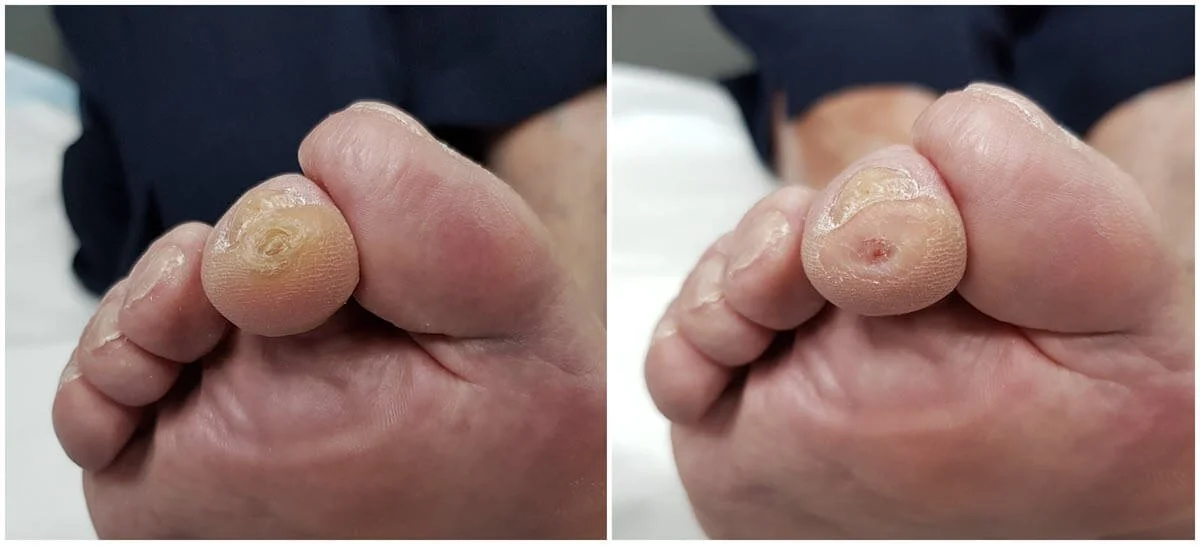
Corns and calluses in Esperance
Corns and calluses are areas of thick, hard skin that build up on the feet. They're very common, and while they can start out harmless, they often become painful. Rather than putting up with them, we can remove the thick skin to give you immediate relief, and talk about ways to slow them down or stop them coming back.
Callus or corn?
Callus is a broad, flat patch of thick, yellowish skin. It usually forms under the ball of the foot, on the heel, or on the side of the big toe.
A corn is a smaller, more concentrated area of hard skin with a dense core that presses into the skin underneath, a bit like a pebble in your shoe. Corns often form on the tops and tips of toes, on the little toe, or under the ball of the foot.
Soft corns form between the toes, where the skin stays moist. They're white and rubbery rather than hard.
Seed corns are tiny corns, often in clusters, usually on the sole.
Corns can look similar to plantar warts, but the treatment is different. If you're not sure which you have, it's worth getting it checked. See [plantar warts].
What causes them?
Corns and calluses are your skin's response to repeated pressure and shear (the skin being stretched and distorted with every step). The skin thickens to protect itself, but if the pressure and shear keeps going, the thick skin itself becomes the problem.
Common causes include:
Footwear: shoes that are too tight, too short, too narrow or too high, or that rub on the toes
Toe shape: bunions, hammertoes and clawed toes create bony points that press against shoes and neighbouring toes
Foot shape and how you walk: some feet put more load on certain areas, such as under the ball of the foot
Thinning of the natural fat pads under the feet, which often happens with age
Activities and work that keep you on your feet for long periods, often on hard surfaces
Callus also shows where your feet are under the most shear, which is why it often marks the spots where blisters are likely. See [friction blisters].
Why not just put up with them?
Left alone, corns and calluses usually keep thickening and become more painful. A corn's hard core can press into the sensitive tissue underneath, making every step hurt.
For people with diabetes, poor circulation or reduced feeling in their feet, corns and calluses are a particular concern. Pressure under callus can damage the skin beneath without you feeling it, and it's a common place for foot ulcers to start. If that's you, have corns and calluses looked after by a podiatrist rather than treating them yourself. See [diabetes foot checks].
Avoid corn pads and razor blades
Medicated corn pads and corn removers contain acid, which can't tell the difference between a corn and healthy skin. They can burn the surrounding skin and cause wounds, especially in people with diabetes or poor circulation. Cutting corns yourself with a razor blade or scissors can easily lead to cuts and infection.
How we treat corns and calluses
Immediate relief
Rebecca carefully removes the thick skin and the core of any corn using sterile instruments. It's usually painless, because the hard skin has no feeling, and most people walk out more comfortable straight away.
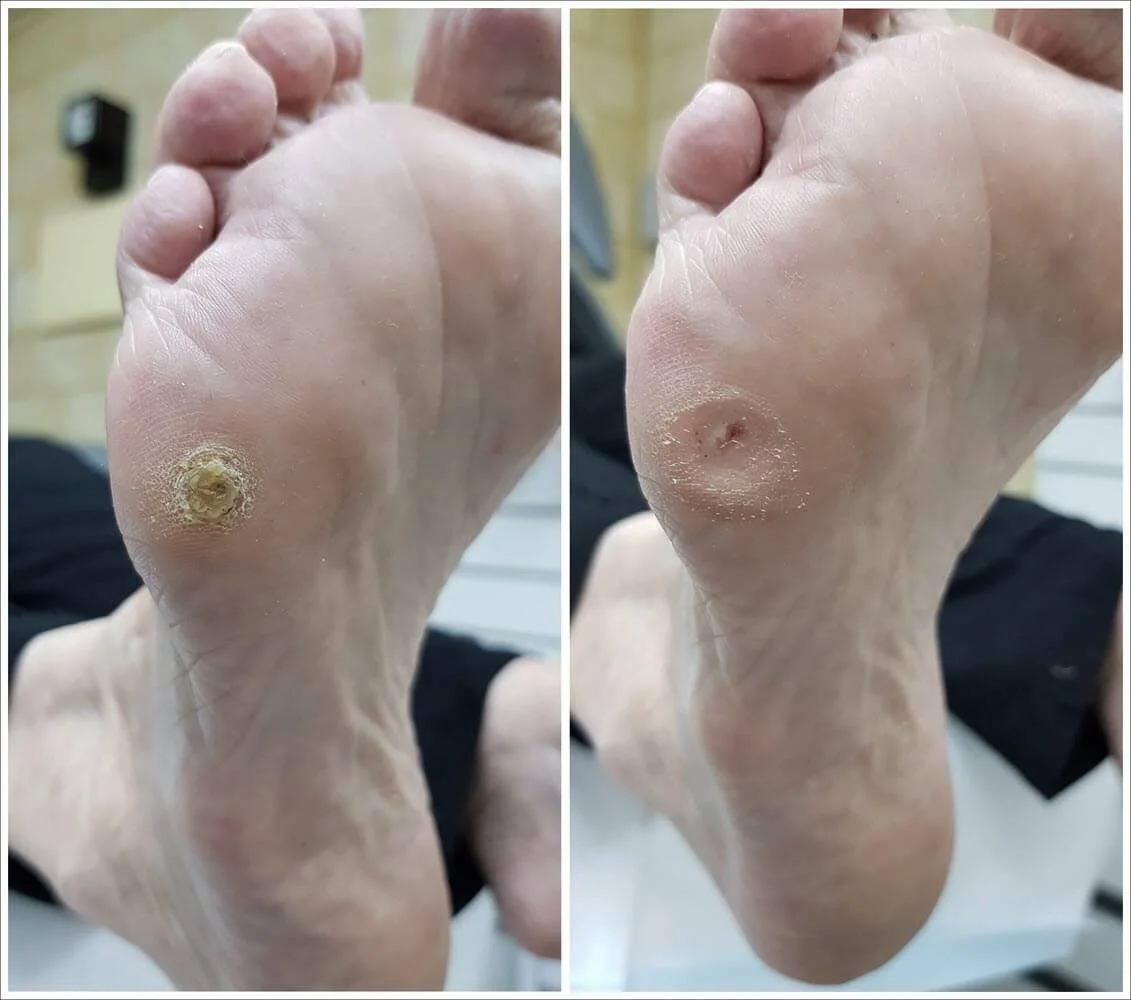
Debridement of a corn and callus
Reducing pressure
Removing the thick skin gives relief, but it will come back if the cause isn't addressed. Depending on what's causing yours, Rebecca may recommend:
Padding and protection, such as gel toe protectors or toe-props to cushion and protect pressure points. We stock gel toe protectors, and Rebecca can make custom toe-props.
Footwear advice: shoes with enough room for your toes and the right fit for your feet
Foot orthoses or insoles to spread the load more evenly under your feet
Looking after your skin at home
Moisturise daily with a urea-based cream, which softens hard skin and slows it building up. We stock Walkers 25% Urea Cream at the clinic. Any cream only works for a short time, so it needs to be applied every day.
Gently file areas of hard skin with an emery board, or during your shower with a pumice stone, a little at a time. Don't file corns or skin that's sore, and don't file at all if you have diabetes or reduced feeling in your feet.
See our guide to [how to wash your feet properly].
Regular care
Many people with recurring corns or calluses come back regularly to keep them under control, before they become painful. Rebecca will suggest how often based on how quickly yours build up.
Book an appointment
If corns or calluses are making your feet sore, book in with Rebecca at Esperance Podiatry. No referral is needed.
Call (08) 9072 1514 or visit us at Suite B, 116 Dempster Street, Esperance.