
Ankle, leg and knee pain treatment in Esperance
Your ankles, lower legs and knees work hard with every step, absorbing load, keeping you balanced and propelling you forward. Pain here can come from a sudden injury, like rolling your ankle, or build up gradually from doing too much, too soon. Because your feet are the foundation for everything above them, the way your feet work can also play a part in shin and knee pain.
Whether you're a runner, a walker, play weekend sport or spend long days on your feet at work, getting the right diagnosis early usually means a faster recovery.
When to get help urgently
Some leg and ankle problems need medical attention the same day. See your GP or go to the Emergency Department if:
you can't take more than a few steps on the injured leg, or there's tenderness directly over the ankle bones, which may mean a fracture
you felt a sudden "snap" or a feeling like being kicked in the back of the heel, which may mean an Achilles tendon rupture
your calf is painful, swollen, warm or red without an injury, which may mean a blood clot (DVT)
your foot or leg is suddenly numb, cold or changing colour
For knees, also seek prompt medical help if your knee is hot, red and swollen without an injury, locks so you can't straighten it, or gives way after a twisting injury.
Common causes
Ankle sprains
A sprain happens when you roll your ankle (actually your subtalar joint) and stretch or tear the ligaments that hold it together, usually on the outside of the ankle. You'll typically have pain, swelling and bruising, and it may be hard to walk. While most sprains heal well, up to a third of people go on to have ongoing problems such as pain, swelling or an ankle that keeps "giving way" (chronic ankle instability). The best way to prevent this is good rehabilitation, especially balance and strength exercises, rather than just resting until it stops hurting. I always suggest you see a physiotherapist in the acute ankle sprain phase, and to see them periodically so they can progress you through the best exercises that optimise the healing of your ligaments.
If you find yourself with ongoing problems like chronic ankle instability some months later, see a podiatrist.
Achilles tendon pain (Achilles tendinopathy)
The Achilles tendon joins your calf muscles to your heel bone. When it's injured or overloaded, it can become painful and stiff, especially first thing in the morning or at the start of exercise. There are two main types:
Mid-portion: this is your typical Achilles tendinitis
Insertional: this is slightly different because the problem is where the tendon attaches to the back of the heel bone
The correct diagnosis is important because each needs a variation on the same treatment. The exercises often given for mid-portion Achilles tendinitis will usually make insertional Achilles tendinitis worse.
Achilles pain is common in runners, in people who've recently increased their activity, and in middle age. Tendons respond best to the right kind of progressive loading exercise, so complete rest usually isn't the answer.
Shin splints
Shin splints is a general term referring to many types of shin pain.
Medial tibial stress syndrome: This is an aching pain along the lower inner edge of the shin bone, usually felt during or after running or walking. It's common when people start a new exercise program or increase their training quickly, and in people with flat feet.
Tibialis anterior overuse: Pain higher up the front of the shin and a little to the outside is a muscle overuse syndrome where the tibialis anterior works too hard because of tight calf muscles. It usually presents when walking in barefeet or flat shoes, or walking uphill.
Tibial stress fracture: Pain in one specific spot on the shin bone, or pain that's present at rest or at night, may mean a stress fracture and should be checked.
Tendon pain around the ankle
Other tendons around the ankle can also become irritated:
Tibialis posterior tendon pain on the inside of the ankle, which can lead to a collapsing arch in adults. Read more about flat feet and progressive collapsing foot deformity.
Peroneal tendon pain on the outside of the ankle, which is common after ankle sprains and in people with high arches.
Knee pain
Podiatrists don't treat every type of knee pain, but when the way your feet work or the load from walking and running is contributing, foot-based treatment can make a real difference. Common examples:
Pain around the kneecap (patellofemoral pain or "runner's knee"). An ache around the kneecap is often linked to foot posture.
Knee osteoarthritis. Footwear, wedging and orthotics can help reduce the load on painful knees and keep you walking comfortably.
For knee injuries such as ligament or cartilage tears, Rebecca will refer you to your GP or a physiotherapist.
Nerve irritations
A nerve entrapment on the inside of the ankle called tarsal tunnel syndrome can cause burning or other nervey sensations into the foot. Foot pain can also be referred from the back. Part of Rebecca's assessment is working out which of these is involved.
How we treat ankle and leg pain and dysfunction
Rebecca will assess your feet, ankles and the way you walk or run, and talk through your treatment options. Treatment usually combines several of these:
Load management and exercise-based rehab: Depending on what is sore and what aggravates it, we find ways to deload that tissue so it settles, before we start loading it in a very specific manner to help you build strength and resilience into it so it is less llikely to get painful or breakdown again.
Footwear: The right shoes for your injury, foot structure and function, activity goals can reduce the load on painful tissues. For example, insertional Achilles pain is often better in a high-ish heeled shoe (eg: 10mm heel-to-toe drop) rather than flat (zero drop shoe or barefoot).
Orthotics and heel lifts: Orthotics can help when foot posture is contributing to the problem, such as flat feet with shin splints, tibialis posterior pain or kneecap pain. A small heel lift can temporarily reduce the strain on a painful Achilles tendon.
Taping and bracing: Taping can protect recently injured joints to help you return to some level of activity. For more severe or ongoing foot, ankle and leg problems, the Richie Brace can be very helpful for conditions such as progressive collapsing foot deformity, drop foot and severe lateral ankle instability (eg: in Guillain-Barré syndrome). We can also prescribe moonboots when the injury demands it.
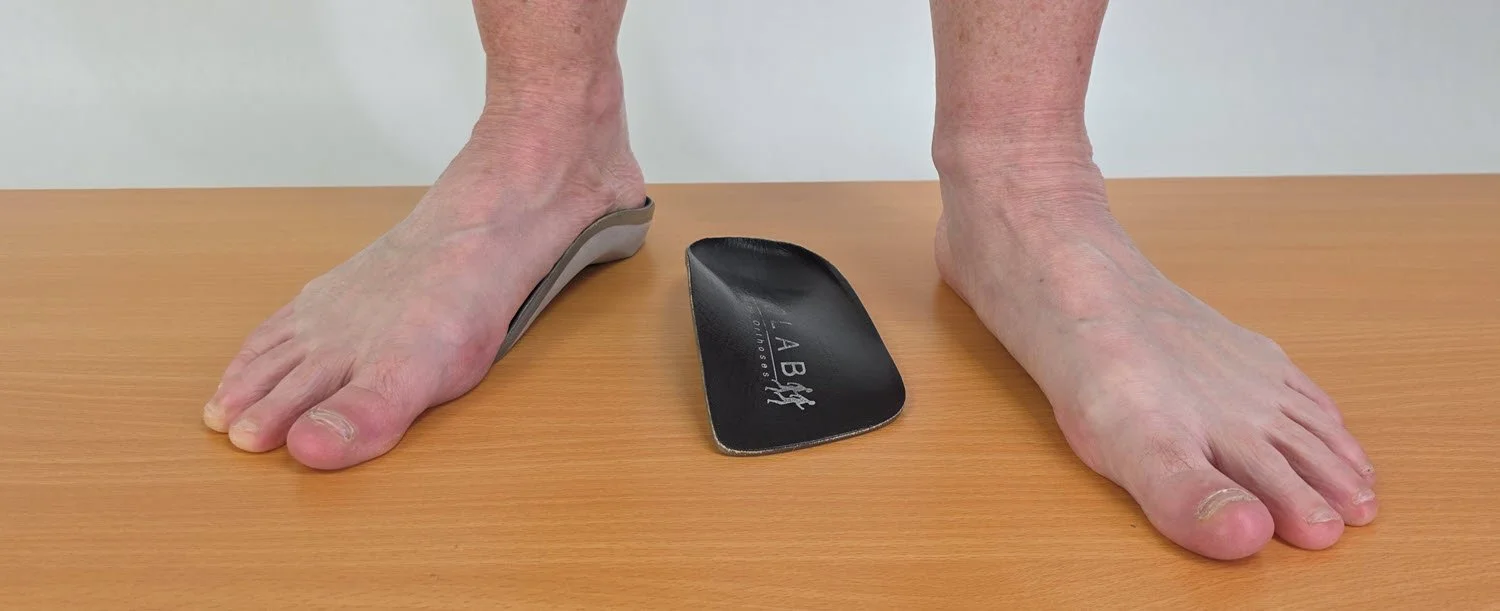
Custom foot orthotics for pain related to flat feet
When further help is needed
If your pain isn't improving as expected, Rebecca may refer you for imaging, such as an X-ray or ultrasound, or to your GP, or physiotherapist.
When to see a podiatrist
Book in if:
you've sprained your ankle and it's still painful, swollen or feels unstable after a couple of weeks
your ankle keeps rolling or "giving way"
you have pain in your Achilles, shins, knees or around your ankle that's lasted more than a week or two
pain is stopping you from walking, running or playing sport
you a tripping or falling frequently
your child has knee or heel pain with sport
you're planning to start or step up an exercise program and have had problems before
Book an appointment
If your ankle, leg or knee is holding you back, book in with Rebecca at Esperance Podiatry. No referral is needed.
Call (08) 9072 1514 or visit us at Suite B, 116 Dempster Street, Esperance.