
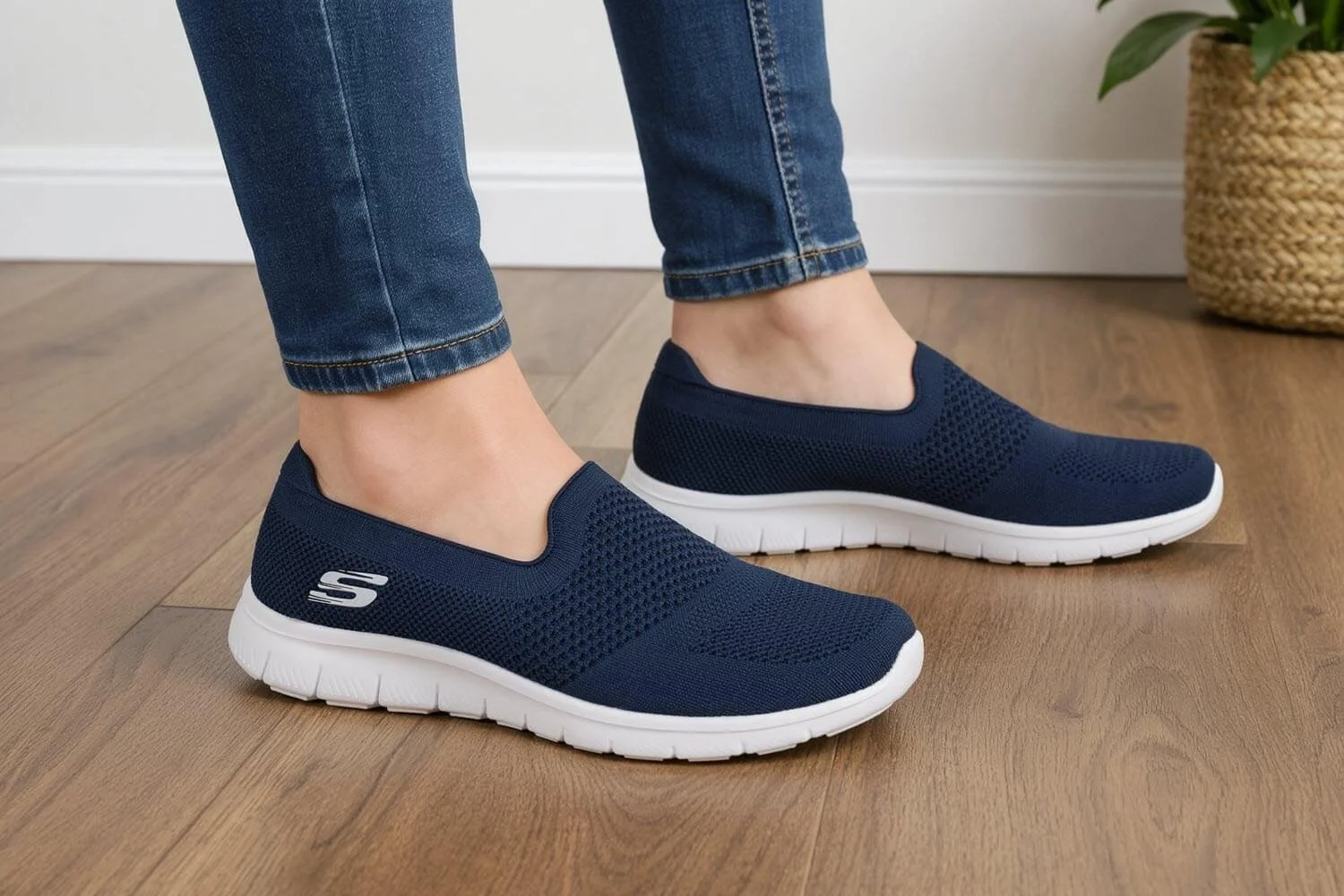
Shoe fit checks in Esperance
Most people buy shoes by the number on the box. But shoe sizes aren't consistent between brands, or even between styles from the same brand, so a size 8 in one shoe can be a completely different length in another.
Even when a shoe is the right size, there's a second problem most people never notice: where your foot actually sits inside it. A shoe that fits on paper can still be crushing your toes every step you take.
A shoe fit check takes the guesswork out. Rebecca checks whether your shoes are the right length for your feet, and where your toes are really sitting inside them.
Forget the numerical shoe size: length is what matters
A well-fitting shoe has about a thumb's width of space between the end of your longest toe and the end of the shoe. Your longest toe isn't always your big toe. For many people, it's the second toe.
Your two feet are often slightly different lengths, and feet change over time, especially during pregnancy, with age, and as children grow. The size you bought last time may not be the size you need now.
The hidden problem: your foot sliding forward
This is the one most people miss. If your laces, zip or other fastening are done up too loosely, your foot slides forward inside the shoe with every step, and your toes jam into the front. As far as your toes are concerned, you could be wearing a shoe that's several sizes too small, even though the shoe itself is the right size.
It's especially common with:
slip-on shoes and pull on boots, especially as they get older
any shoe where the laces are left loose so they're easy to slip on and off
shoes with elastic laces
work boots with laces and zips
walking downhill, where gravity pushes your foot to the front of the shoe
The problems poor shoe fit can cause
When your toes are squeezed or jammed into the end of your shoe, day after day, it can lead to:
corns and calluses, especially on the tips and tops of the toes, and between the toes
black or bruised toenails
bent toes, such as hammertoes and clawed toes
Often, people treat the problem over and over without realising their shoes are the cause.
What happens at a shoe fit check
Please bring the shoes you wear most, including your work boots, sports shoes and everyday shoes. You can also bring in brand new shoes if you’d like them checked before you start wearig them. Rebecca will:
Check the length of each shoe against your feet, rather than relying on the number on the box.
Look inside your shoes. By removing the insole, Rebecca can see the marks your toes leave, which show exactly where your foot sits when you're wearing the shoe, and whether it's sliding forward.
Check your fastening. How you do up your laces, zip or straps makes a big difference, and small changes can hold your foot back in the shoe where it belongs.
Talk you through the results, including which of your shoes are helping, which are hurting, and what to look for next time you buy.
Shoe fit and children
Children's feet can grow a size every few months, and children rarely complain that their shoes are too small. Read more about children's feet.
Fees
A shoe fit check can be added to any appointment, or booked on its own as a short appointment, and is charged at our standard time-based fees. See our fees.
Book a shoe fit check
No referral is needed. Please bring the shoes you wear most often.
Call (08) 9072 1514 or visit us at Suite B, 116 Dempster Street, Esperance.